“One thing we know from psychology about the learning process is that the act of reaching into your brain, grabbing some knowledge, pulling it out, chewing on it, talking about it, and putting it back helps you learn. Psychologists call this elaborative encoding…. We’re trying to get math teachers to help students engage in that process of elaborative encoding.”
Jon R. Star, a psychologist and professor of education at the Harvard Graduate School of Education. (“One way is the wrong way to do math. Here’s the right way,” The Harvard Gazette, 2021).
I look at the standards. I look at the instructional focus calendar. I look at the chapter tests. I want to see the big picture.
Seeing is believing.
Prepping is planning.
We did this together. I was on the other side. We talked about so much. We saw so much. A giant array. Columns. Rows. One hundred. Perimeter. Inches. Money. Tens. Concrete.
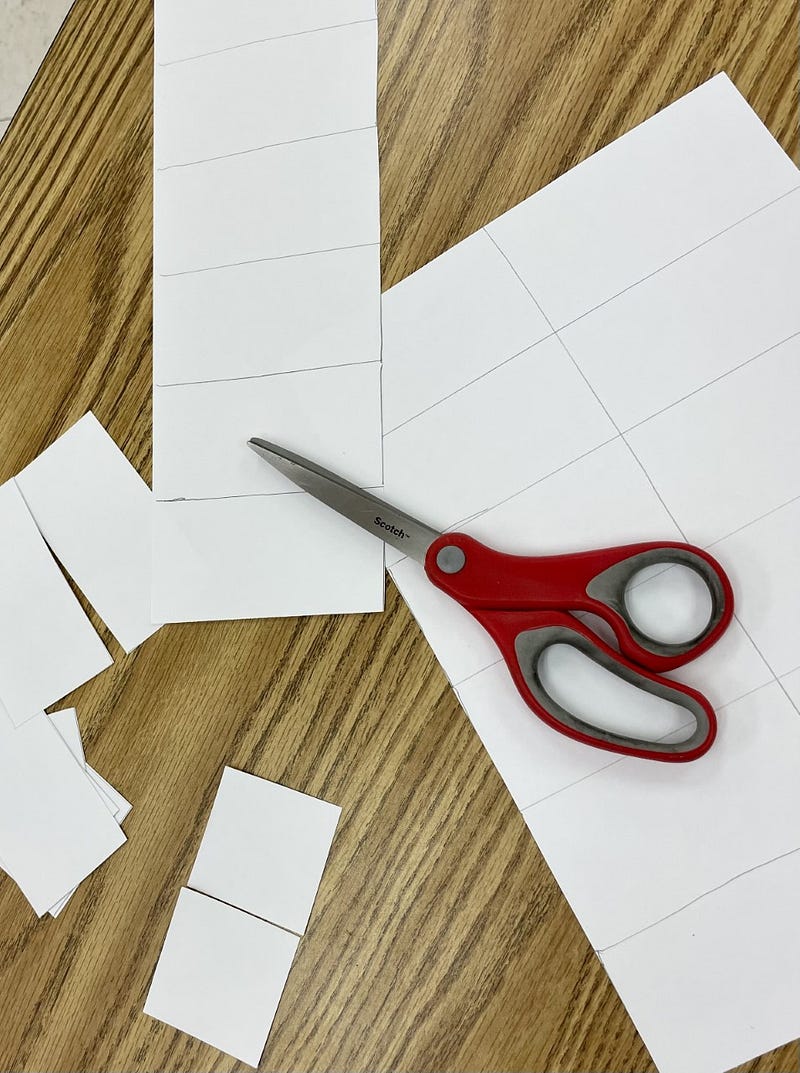
I use my planning time to cut and think and experiment. One inch white paper squares seem as important to math as my stacks of notebook paper are to writing.
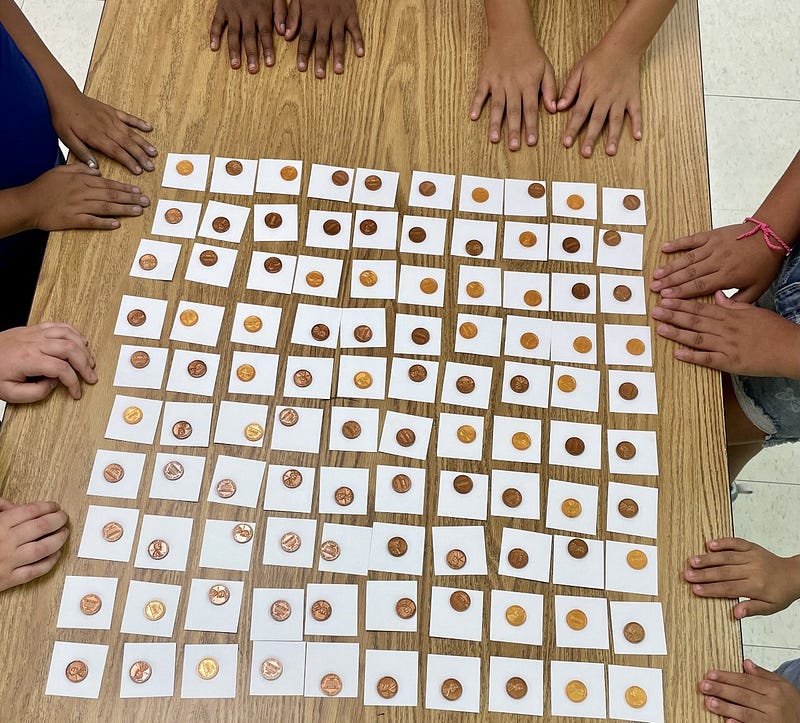
Maybe 2X2 squares are good too. Bigger for little fingers and counting by twos. I need more time. I want to make 3X3s, 4X4s, 5X5s… so much to do.
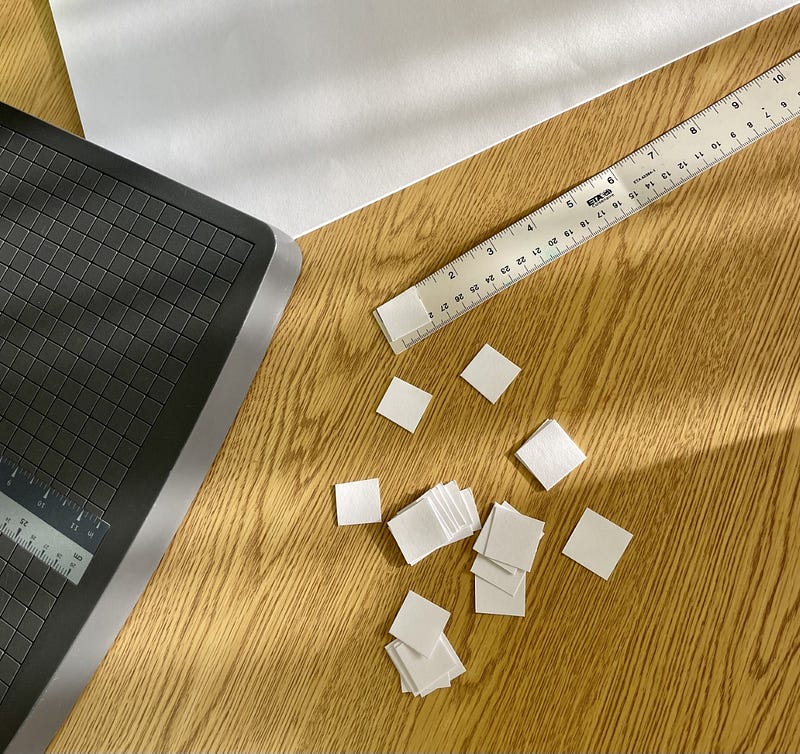
What is an array? A wonderful way to organize. An authentic way to sort and pack. I see rectangles. I see fractions. I see measurement activities. I see the whole and not just the part. The big picture instead of each individual standard. I see this when I have quiet time to think…
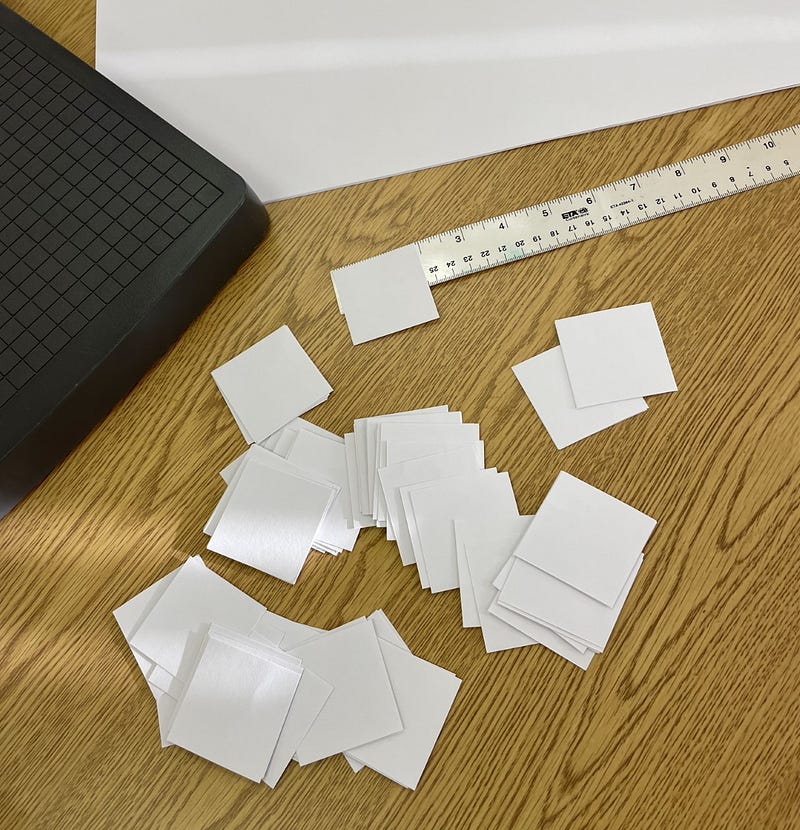
If I take the 2X2s and put them together, we can make dollar bills. They can make their own play money. They would love that. The fine motor, the stamina, the learning by doing…. Maybe I just let them try. Who cares if they don’t come out like mine? It’s the process, not the product. It’s not wasting paper. It’s using paper.
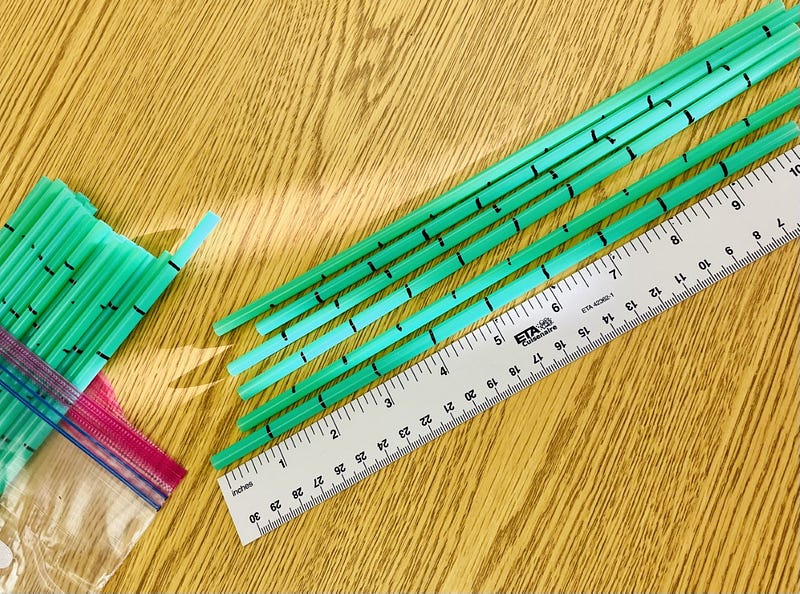
I bought straws to bundle into tens at the start of the school year. I had an aha moment. Rulers made from straws. And I knew I had black Sharpies. I always have lots of those. Black Sharpies, Packing Tape, White Construction Paper, Adding Machine Tape, Notebook Paper, Pink Erasers, Pencils, Crayons, Colored Pencils….Some of the basics to make math meaningful.
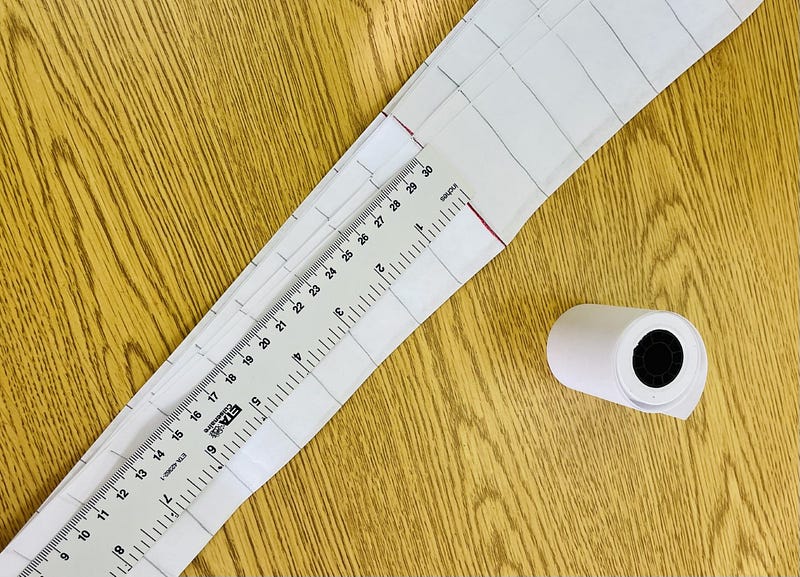
Number lines. They need number lines. A great way to practice writing numbers and seeing that numbers get bigger and smaller. And then they can use them to add and subtract. And they can learn about half. They can choose the number that goes halfway in between. Then, they can go up and they can go down. Perfect.
Three dimensional shapes. I have plenty of those. Rectangular Prisms. Six faces that are rectangles. Fun to measure.
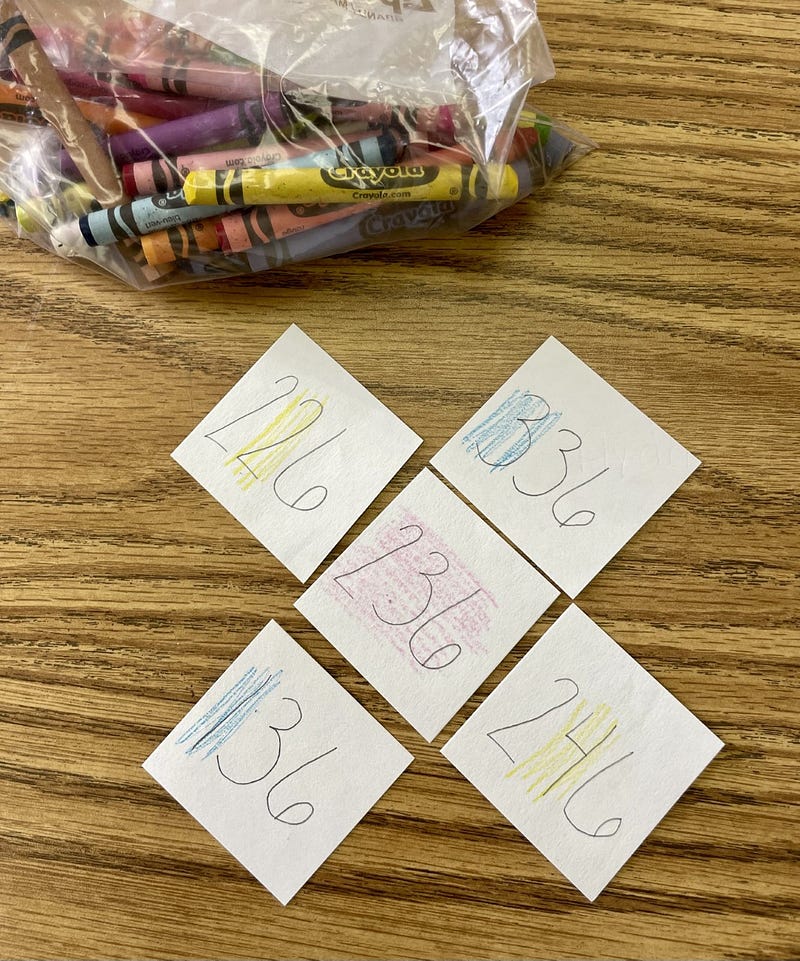
Pick a three-digit number. Add 100. Subtract 100. Add 10. Subtract 10. “Chew on it. Talk about it.” Understanding Place Value.
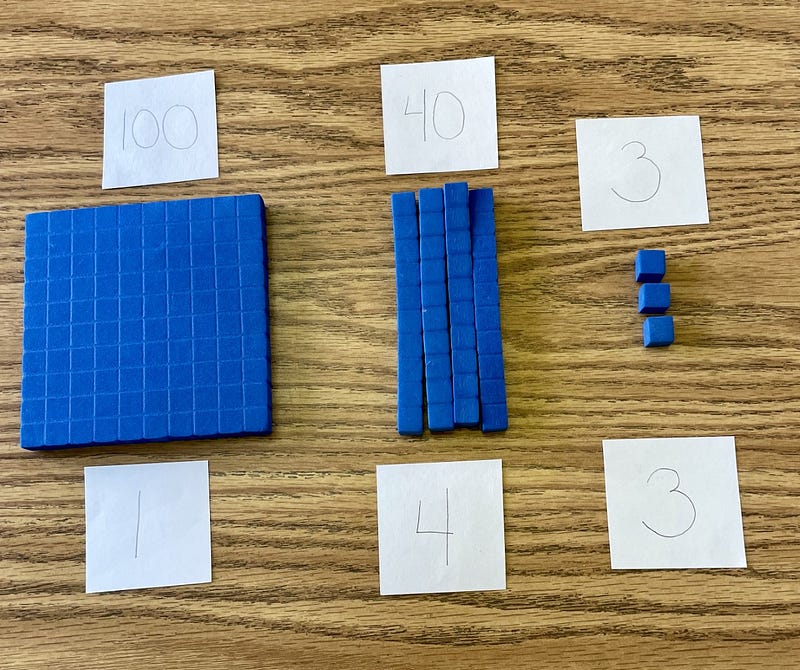
Those white squares. I knew they would come in handy. Labels for those base ten blocks. Base ten blocks should be a classroom staple in all elementary schools. And a great investment for the home. I keep my hundreds in one bin, my tens in another and my ones in another. I often write on the tens, numbering them from one to ten, so they can see that a ten equals ten ones. I also cut tens into fives and put those into the ones bin.
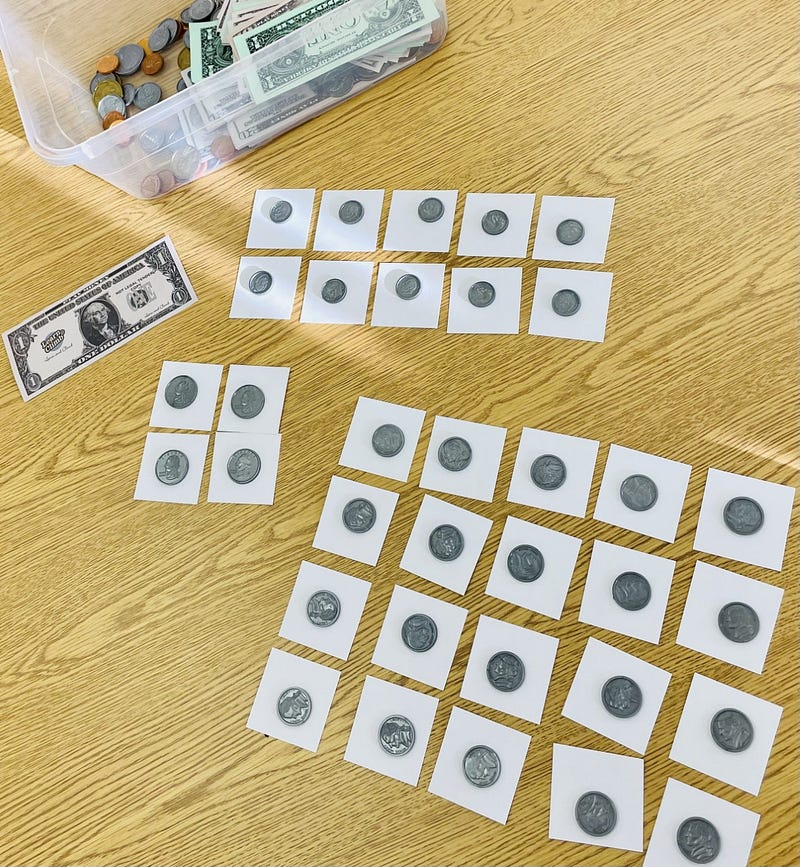
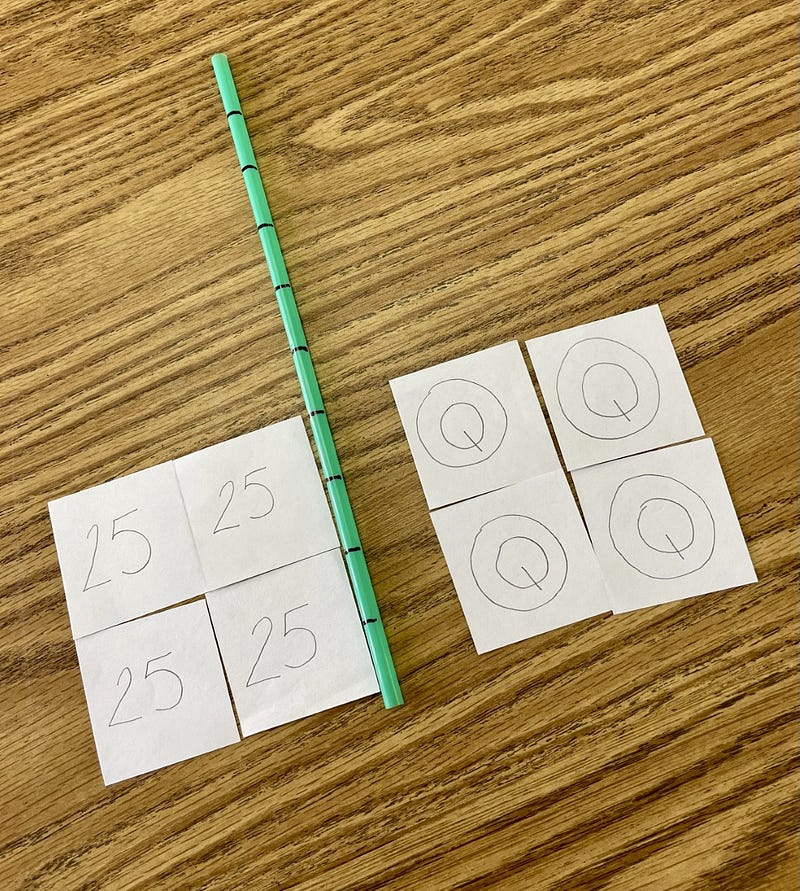
Let’s move from Concrete to Representational. Maybe start with the worth of the coin. That is also great for the understanding of fractions. Then, draw the coin. Great practice making circles. Let them draw and write. Not just sit. And Q, D, N, P, a little bit of phonics thrown in. And then some measuring. I think I love these straw rulers. Maybe I am onto something.
I’m ready to see if this number line idea will work. Choose three different numbers from one to nine. Write each number on a white square. Then, get three more white squares and write the numbers in expanded form. Make an array. Oh, with some tape, the array won’t fall apart. That will be the number that goes halfway in between. Then, they are ready to write the numbers going up and the numbers going down. They can even measure their number line. And their array. And use colored pencils to highlight. In this case, I just highlighted the number in the middle of the number line.
When I am done, I throw away my samples. Part of the experience is me doing it with them or letting them figure things out for themselves.