Being a teacher these last two years has not been easy.
This year, I accepted a new position. Each morning, I am supposed to meet with five reading groups. Each week, I am supposed to go into eight classrooms to run a writing workshop. Each afternoon, I am supposed to provide an extra dose of number sense.
This week, I did none of these.
Instead, I was a substitute teacher — again.
I crave structure and organization. I walked into noise and chaos.
And even though I cried this week, I also smiled.
I find ways to be happy.
ONE
Less Worksheets
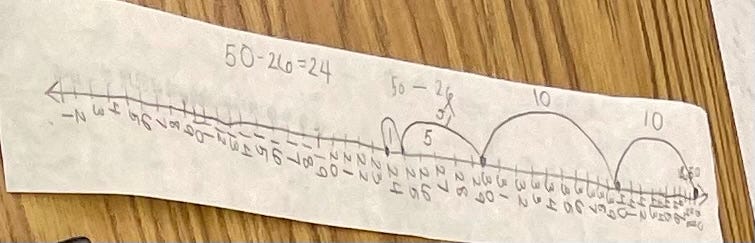
On Friday morning, I grabbed the Mathematics Grade 2 Scope and Sequence, a guide used as a reference for planning purposes. I saw that it was time to introduce the next standard which included the use of number lines for adding and subtracting. I grabbed a roll of adding machine tape (Yes. I buy it often. Endless possibilities). I used a ruler to measure and cut the first strip. I used that strip to cut 17 more.
TWO
Picture Books
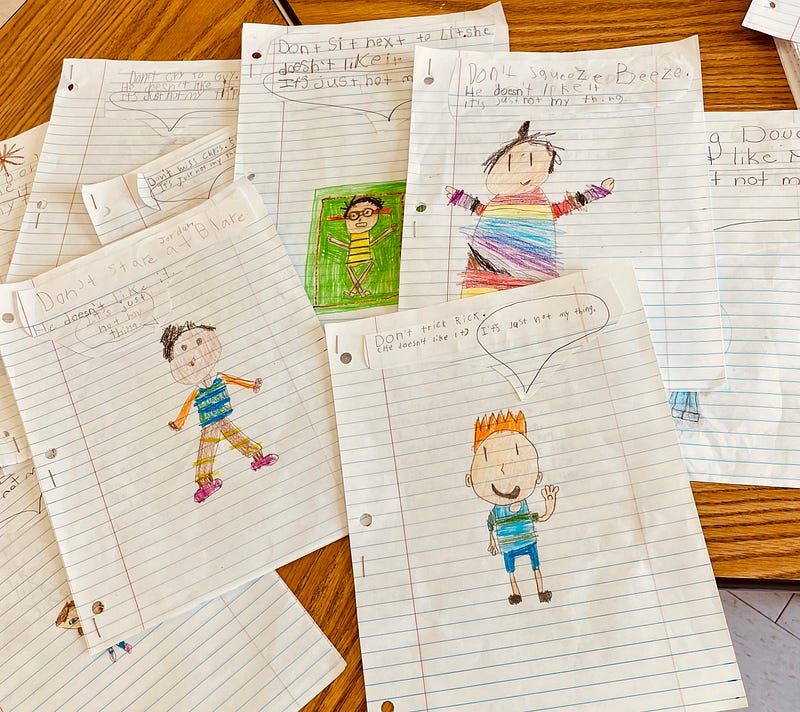
I read aloud one of my favorite books DON’T HUG DOUG (HE DOESN’T LIKE IT). Afterwards, the students did INNOVATIONS, where you add your own twist to a familiar story.
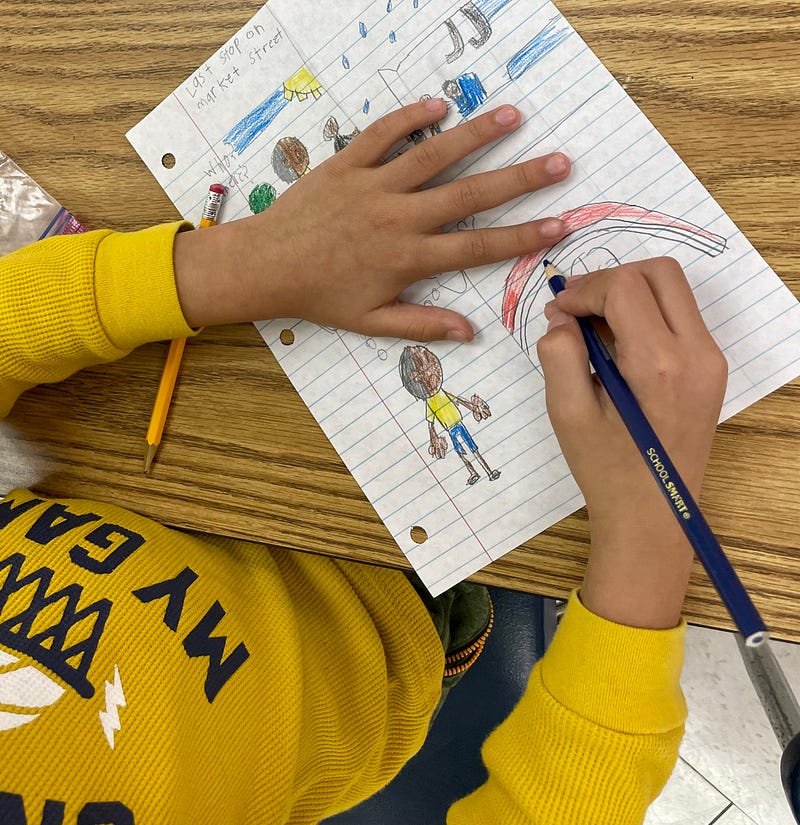
When I go into the eight second grade classrooms , students create planning sheets before they write. I had the idea to do this in reverse. I read aloud LAST STOP ON MARKET STREET and the students made their own planning sheets for the story.
It’s really true. If you have a great picture book, you have lesson plans for weeks. I just love reading aloud great picture books.
THREE
A Daily Schedule
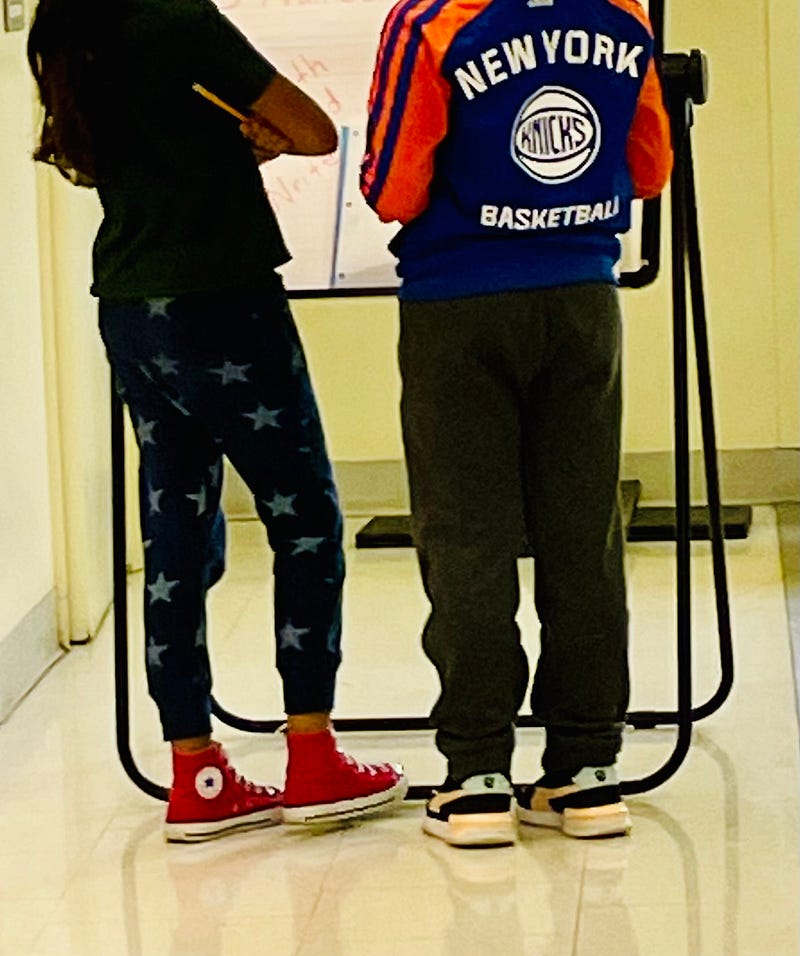
I loved seeing these two standing there. Earlier, I had made a chart with the students showing what activities they were doing while in my room.
I used chart paper like a giant daily planner. It allowed the students to be more independent, to see what they needed to do. This chart listed four things. 1. DON’T HUG DOUG Innovation 2. Chapter Five Math Test 3. Number Line 4. Picture Books, Math Manipulatives. Writing. At the end of the day, I tore it off and threw it in the recycling bin.
“Having a written plan frees up working memory, which makes it easier to focus on the task at hand.”
FOUR
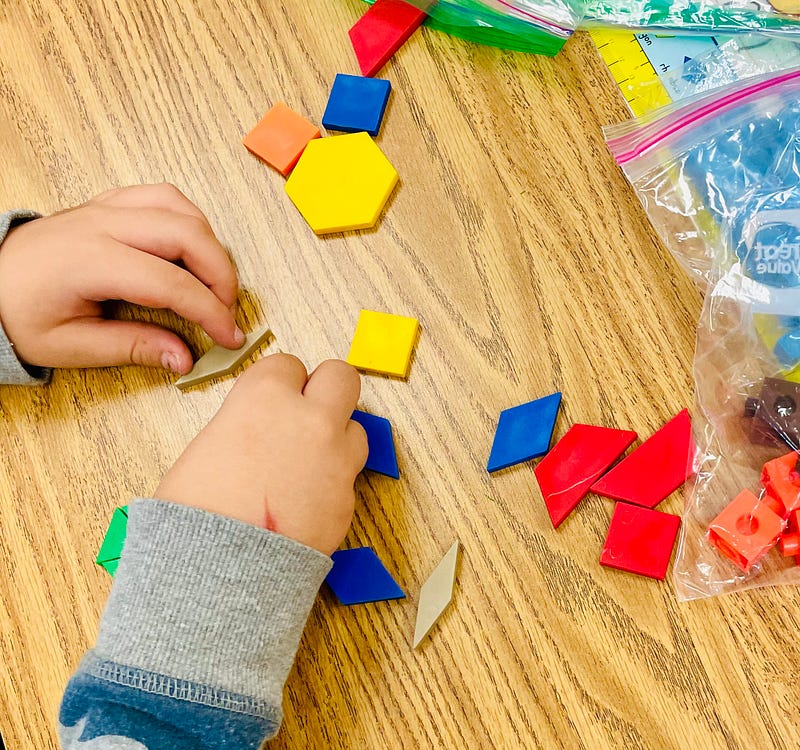
Math Manipulatives
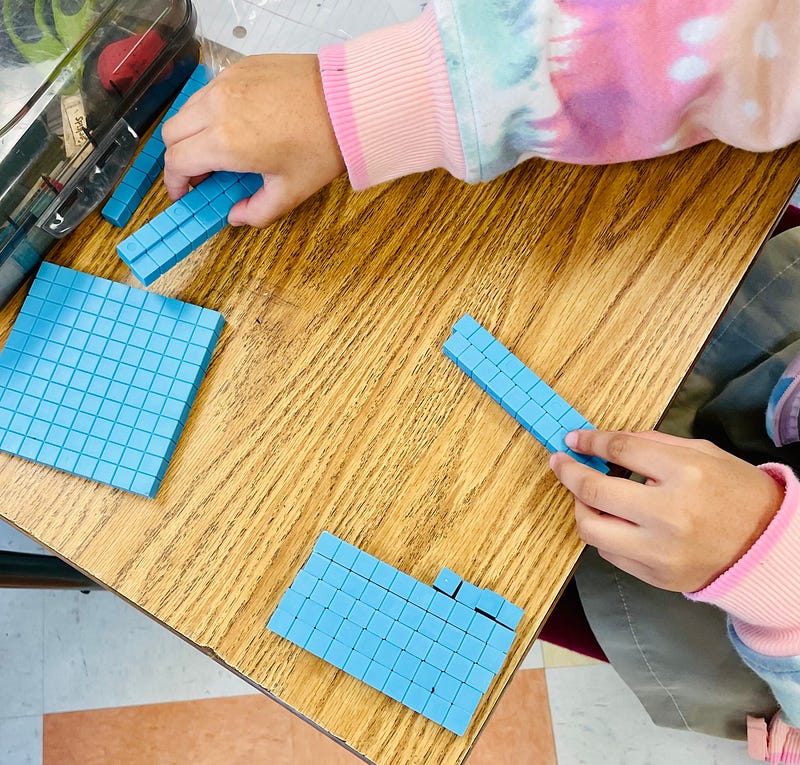
In the classroom where I was subbing, the students had bags of manipulatives. We were reviewing for a chapter five test they needed to take the next day and we took three pauses. This picture was taken during a pause.
Another Pause
FIVE
I Read
I am reading THE GIVER OF STARS.
I read each morning before I leave for work. It clears my mind and allows me to be the role model I need to be. I love the conversations I have with students about the books I am reading.
SIX
Thirty Minutes of Recess
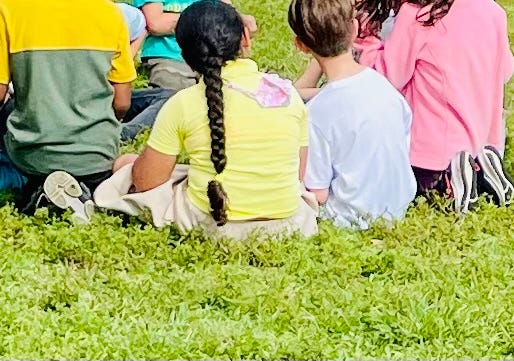
On their own, they decided to play a game of Duck, Duck, Goose. This made me smile.
And happier teachers. One of the best parts of being a substitute teacher this week was our time outside.
SEVEN
Students Work in Groups
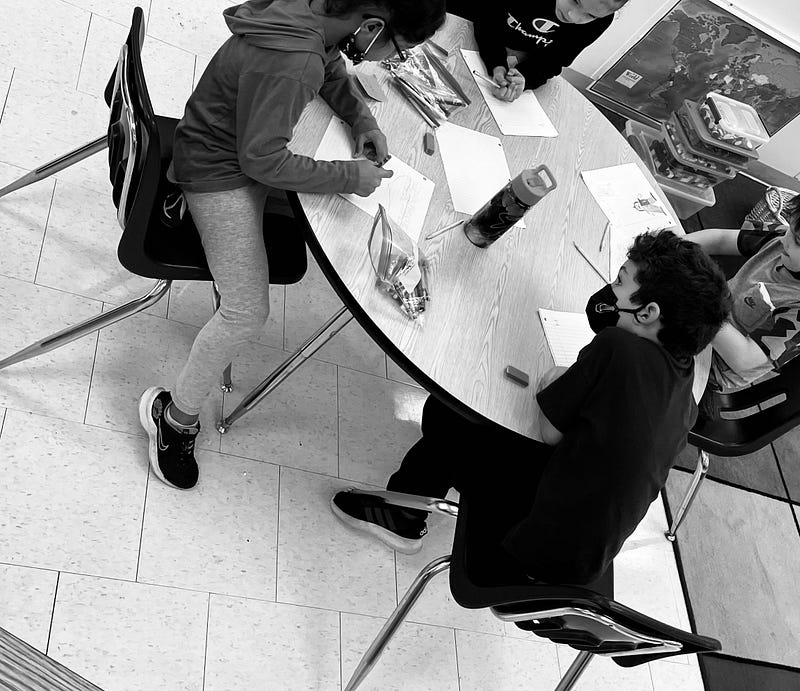
I brought the students back to my portable. I always prefer tables over desks. No matter the grade.
I just love walking around and listening in on their conversations. Tables feel cozier. More authentic. Happier.
EIGHT
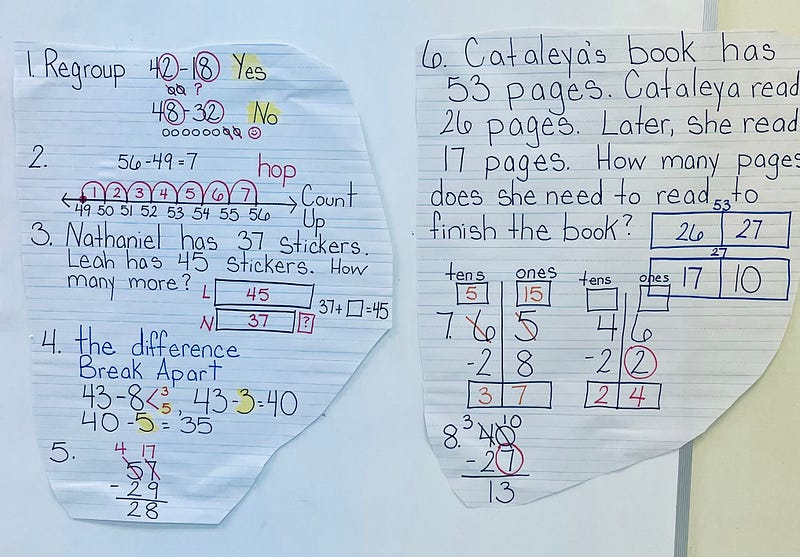
I Create Visuals
Thursday, a text from the teacher asked me to give students the chapter five math test on Friday. I looked at the test. I flipped through the chapter. That morning, we did a review. The dry erase board became covered in thoughts and ideas. I had 30 minute to transfer the thoughts and ideas onto chart paper. I picked them up from special and brought them back to my portable. Tubs of math manipulatives were on the carpet, and clipboards, paper, pencils and erasers were waiting for them. They walked in, eager and observant, recognizing that these charts were created from the work we had done in their classroom.
NINE
I Just Let Them Write
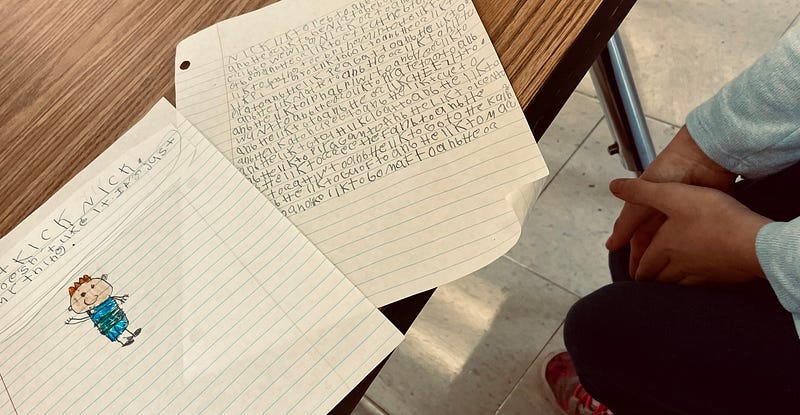
After doing their Innovations for DON’T HUG DOUG, I told them that they could write everything their character does like. These students started kindergarten when schools shut down because of COVID. Many didn’t have time to just play with language. Not everything needs to be edited and corrected. This story made me happy.
TEN
I Lean on Friends
I was having a hard week. On Tuesday night I called a colleague, who is also my friend. I cried. And I cried. On Wednesday, she handed me this wrapped journal with this card.
Teaching has been hard. Noisy and Chaotic. Lacking structure and focus.
I am grateful for my friends.
“They can boost your happiness and reduce your stress.”
So, you are probably wondering, if I could do it all again, would I still major in elementary education. I would….
I definitely would.